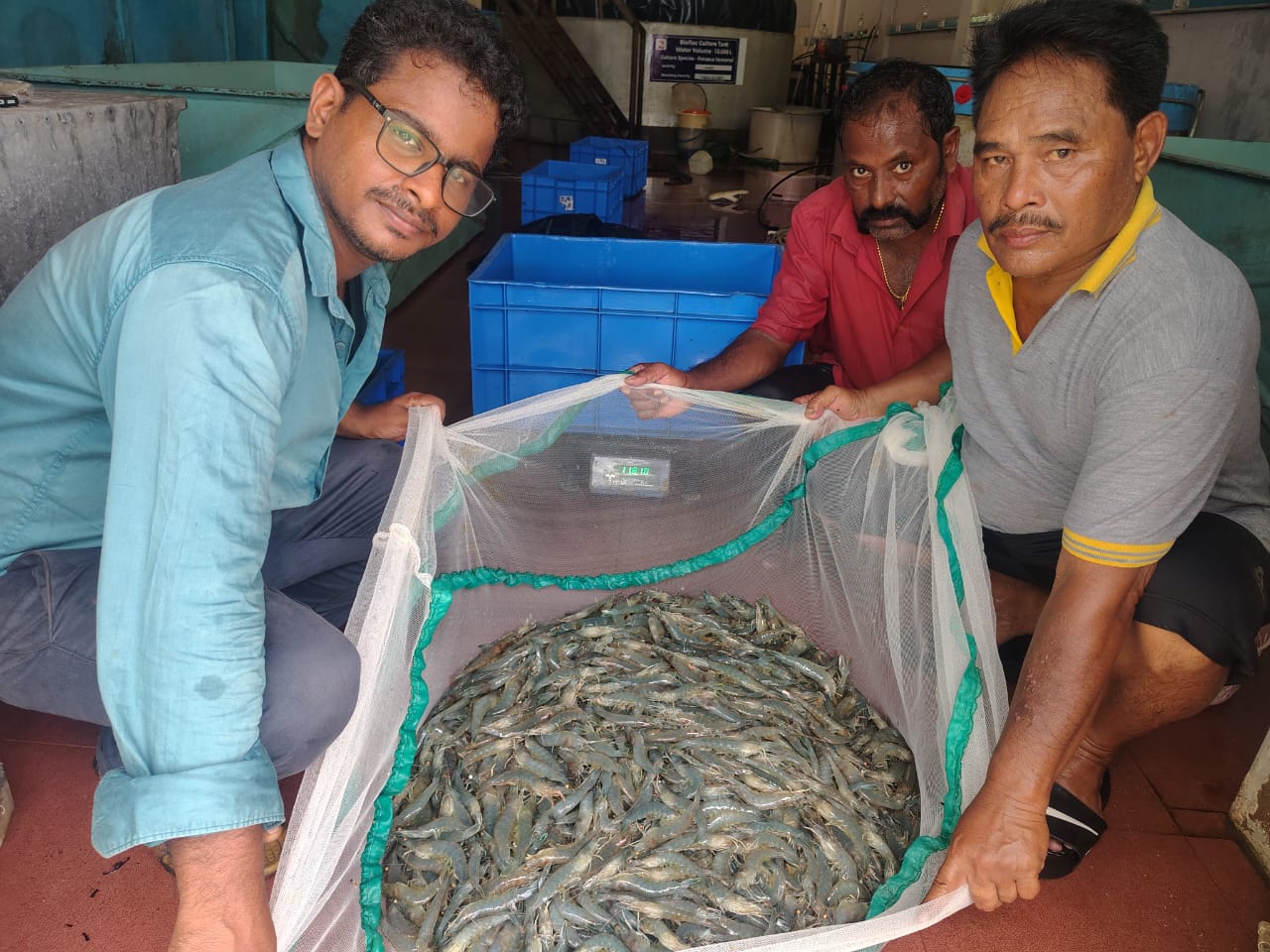
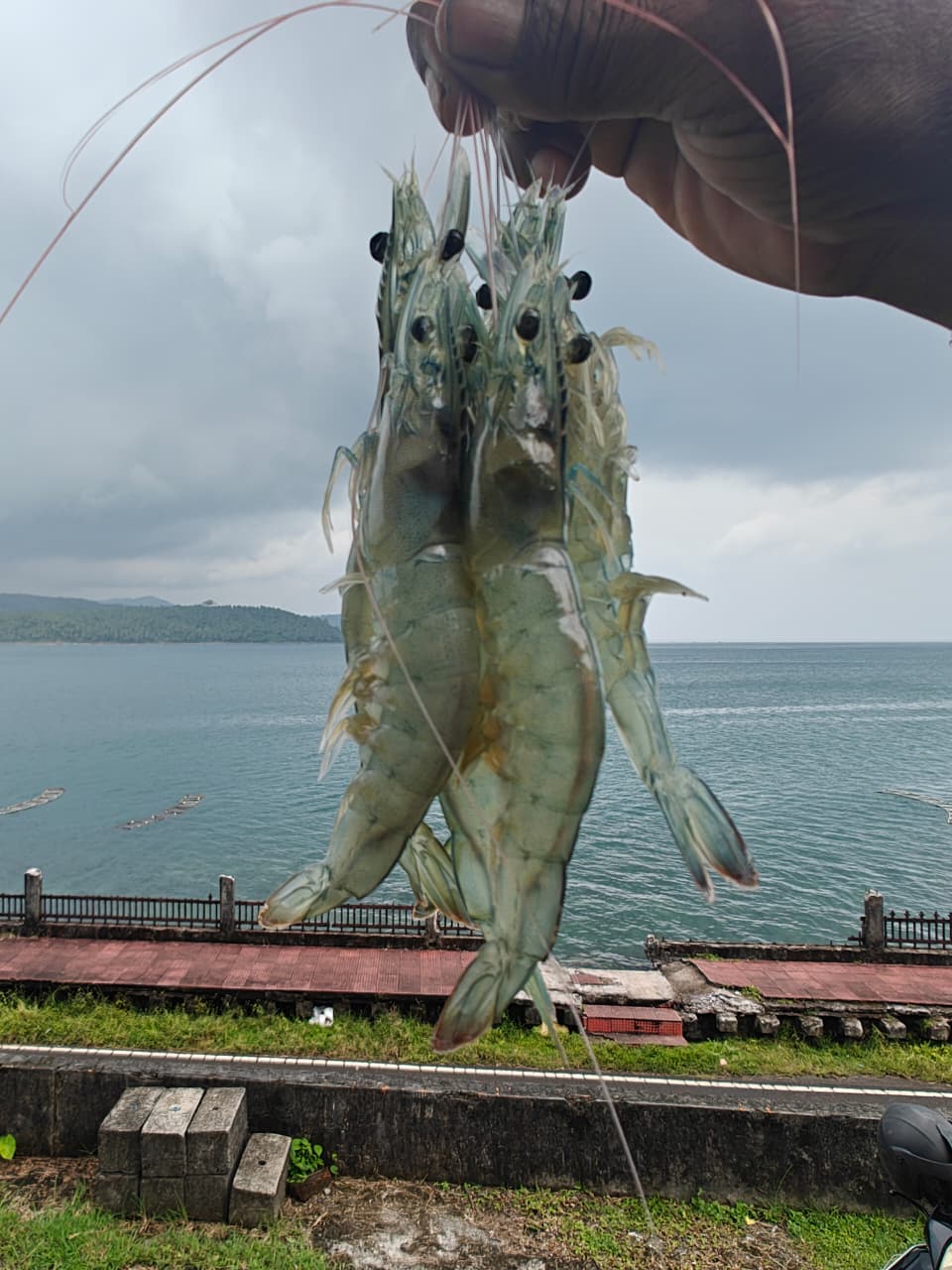
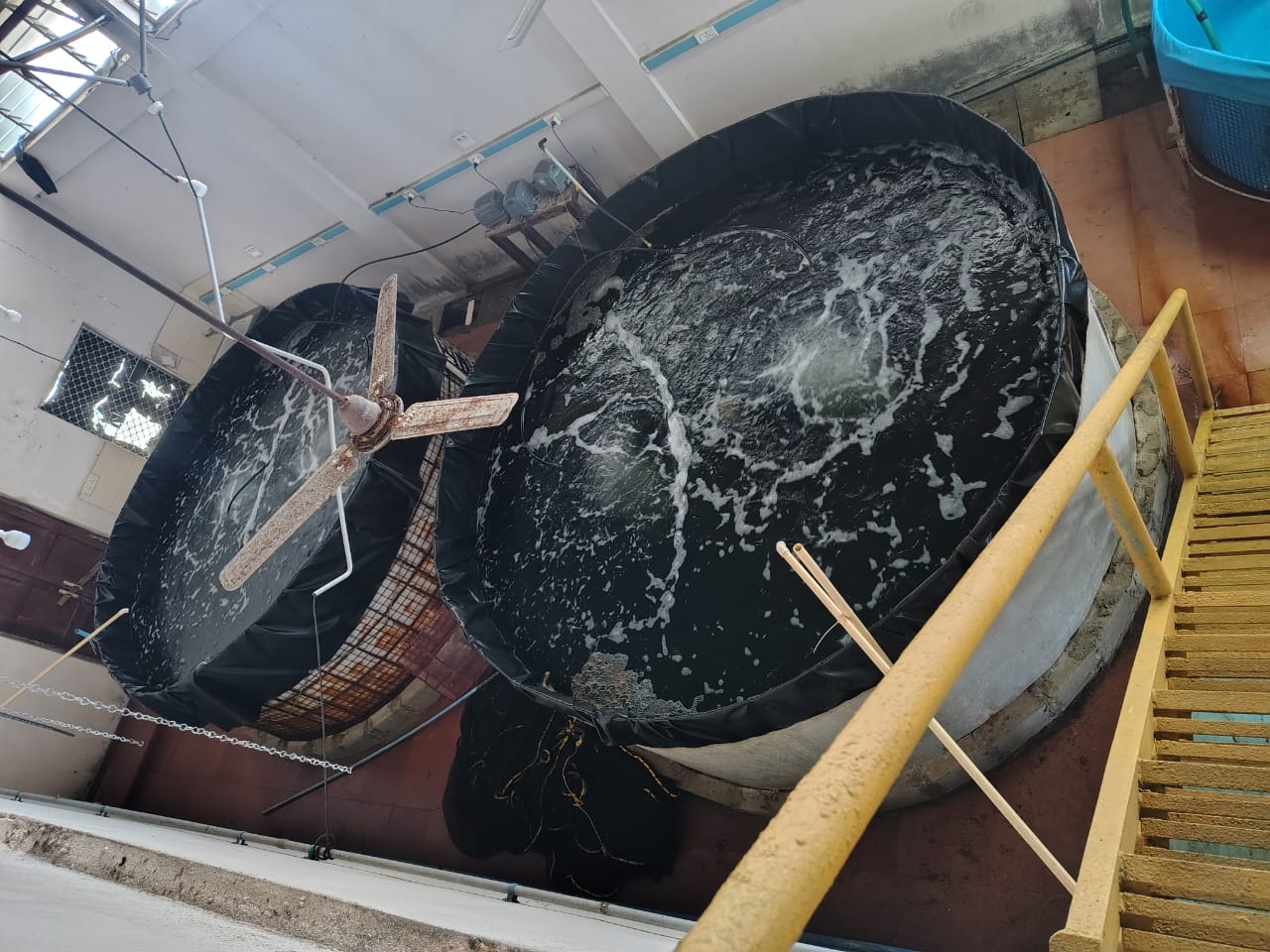
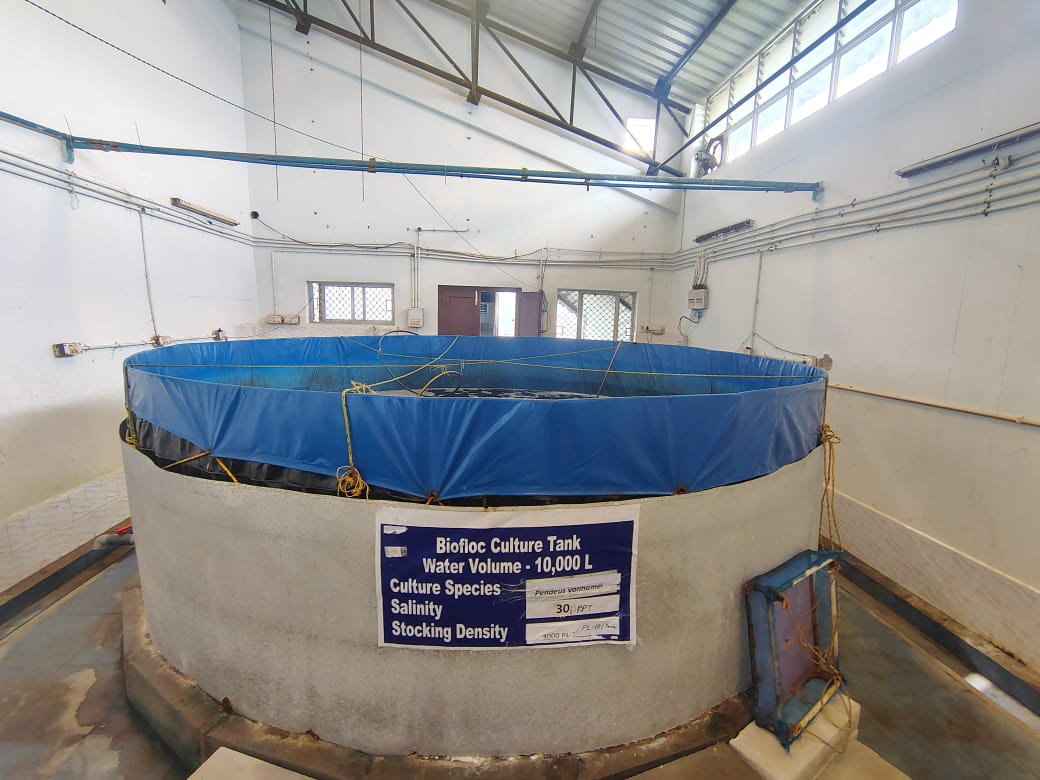

ICAR–Central Island Agricultural Research Institute (ICAR–CIARI), Sri Vijaya Puram standardized high-density culture of Penaeus vannamei under a biofloc-based production system suitable for the Andaman and Nicobar Islands. The Biofloc-based shrimp culture system includes tarpaulin-lined biofloc tanks of 10,000 L capacity and standby power supply for continuous aeration. With the stocking of healthy PL-10 shrimp seed at a high stocking density, 3000/m3, formulated pellet feeds and continuous aeration sustains the indoor shrimp production. The systematic biofloc development, regular monitoring of water quality, carbon supplementation, adequate aeration, and optimized feeding management optimised and for smooth functioning of the culture system for approximately 100–120 days. A farming cycle of 3.5-4 months produces about 30 kg shrimp per tank with an efficient feed conversion ratio (FCR) of 1.2, indicating effective feed utilization and biofloc contribution to shrimp nutrition. The system gives an overall cost–benefit ratio of 1.96 as an economically feasible technology under the island conditions. The standardized protocol provides a promising water-efficient and land-efficient aquaculture technology for shrimp production in the Andaman and Nicobar Islands.
The standardized shrimp biofloc technology developed by ICAR-CIARI has been popularized through training programmes, farmer awareness programmes, demonstrations and technical advisories in the Andaman and Nicobar Islands. The technology refined generated interest among local shrimp farmers due to its efficient use of water, limited land requirement and economic potential. As a result, two progressive farmers from South Andaman District have adopted biofloc technology for Penaeus vannamei shrimp culture. ICAR-CIARI is providing technical guidance on tank preparation, stocking, biofloc development, water-quality management, feeding and disease prevention to support successful adoption and wider dissemination of the technology.