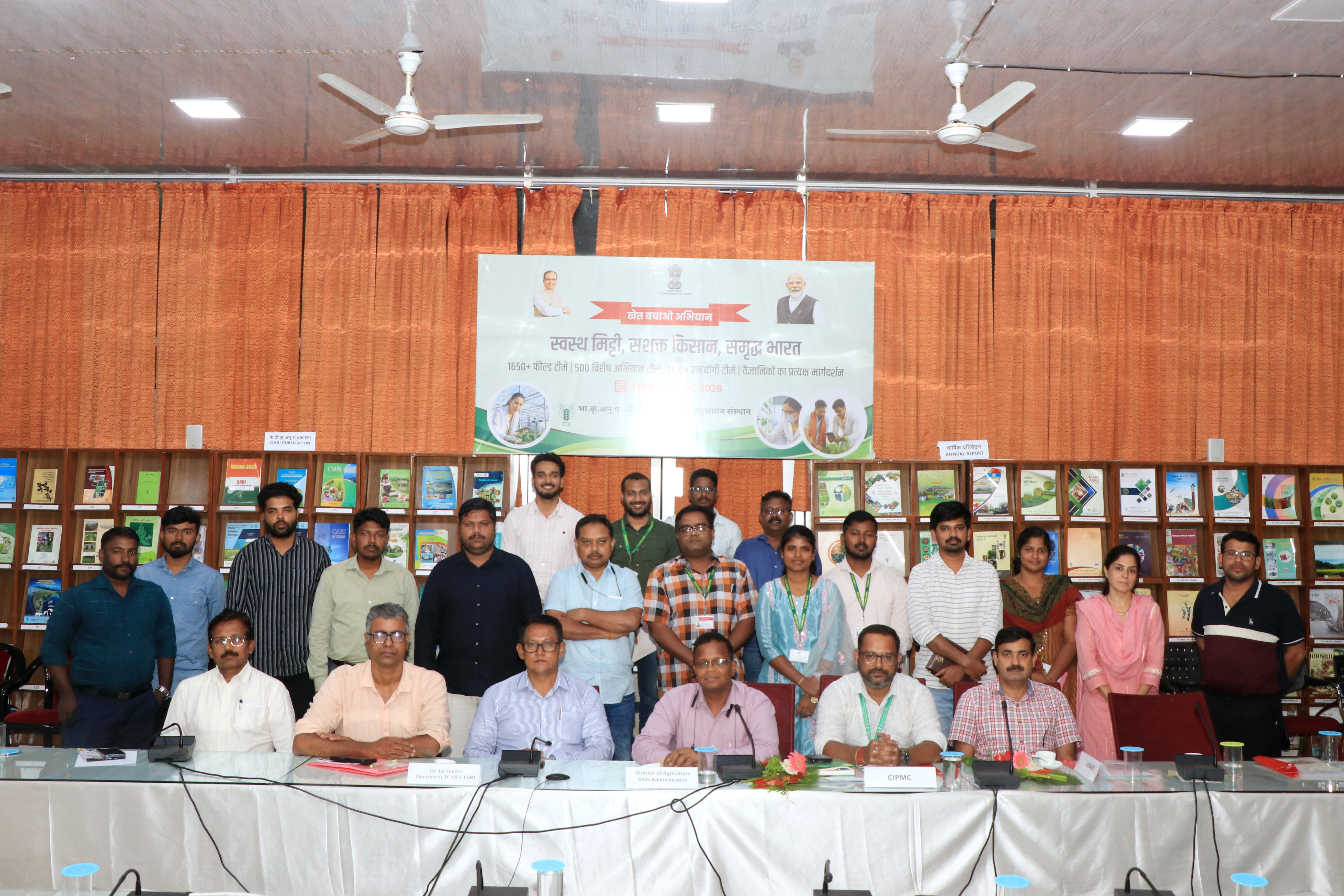
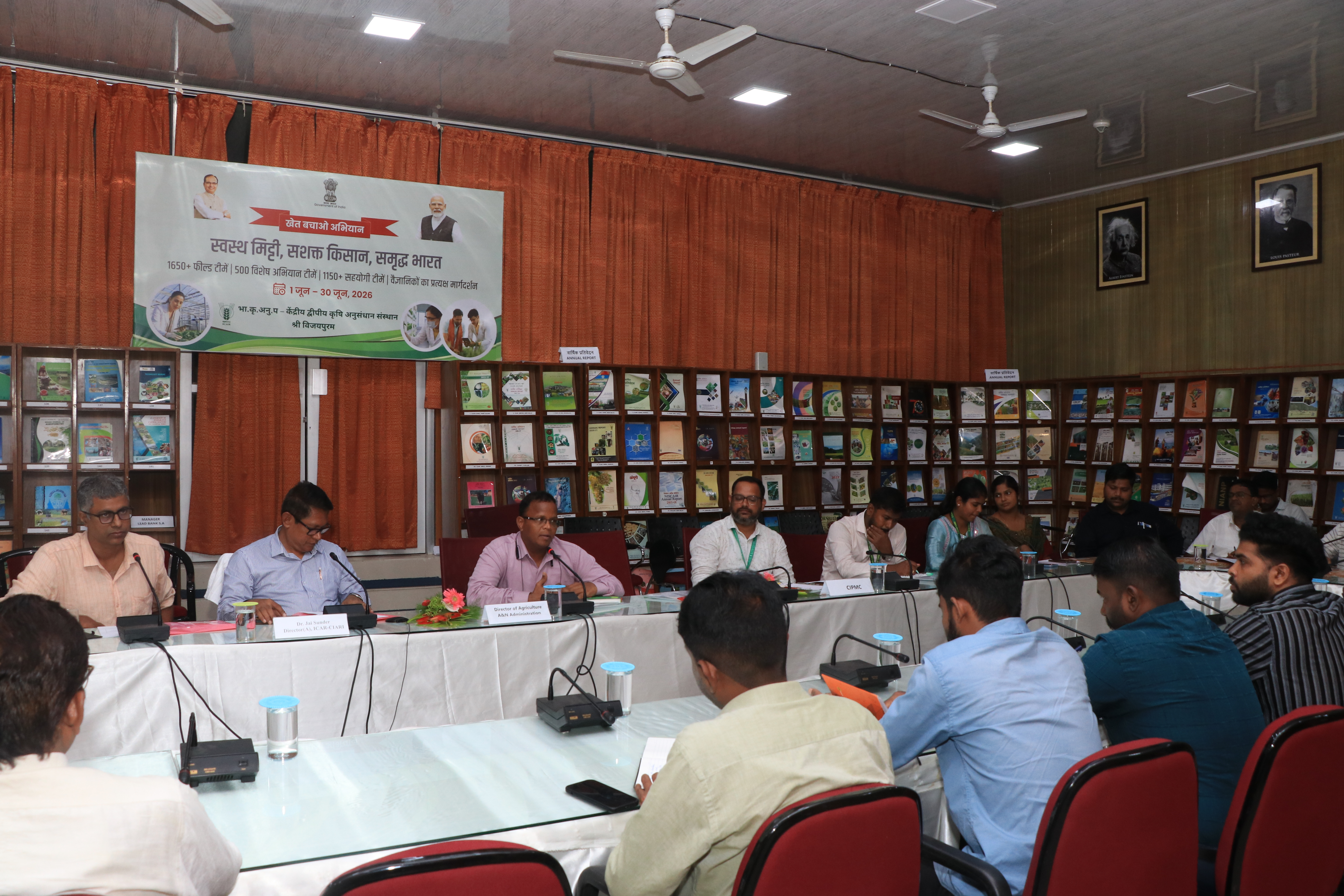

As part of the nationwide initiative "Khet Bachao Abhiyan", the ICAR-Central Island
Agricultural Research Institute (ICAR-CIARI), Sri Vijaya Puram, conducted a Consultation
Meeting for Input Dealers and Stakeholders regarding the Balanced Use of Fertilizers on June 3,
2026. This event convened input dealers, scientists, and officials from the Department of
Agriculture, CIPMC and Krishi Vigyan Kendras (KVKs) to discuss sustainable agricultural
practices and the management of soil health in the Andaman and Nicobar Islands.
In his welcoming address, Dr. Y. Ramakrishna, Principal Scientist and Head, highlighted the
significance of effective collaboration among stakeholders to advance balanced nutrient
management and sustainable farming practices within the Islands.
Dr. Debabrata Basantia, Director of Agriculture, A & N Administration, highlighted the
objectives of the “Khet Bachao Abhiyan” and stressed the importance of balanced use of
fertilizers for maintaining soil health and ensuring long-term agricultural sustainability. He stated
that the month-long campaign aims to strengthen farmers’ awareness and promote sustainable
agricultural practices by providing practical information and technical guidance directly at the
village level through the joint efforts of ICAR-CIARI, KVKs, ATMA, and the Department of
Agriculture. He expressed confidence that the campaign would create a significant positive
impact among the farming community.
An open-house discussion was held among input dealers, stakeholders, scientists, and officials of
the Department of Agriculture. Several important recommendations emerged during the
deliberations. Participants emphasized the judicious use of fertilizers and bio-pesticides to
conserve soil health and advocated greater adoption of biocontrol agents. It was suggested that
the Department of Agriculture could produce Trichoderma-based bio-control formulations with
technical guidance from ICAR-CIARI. The meeting also proposed establishing block-level seed
collection centres, where quality seeds produced by farmers could be procured and distributed
through Farmer Producer Organizations (FPOs), while ICAR-CIARI would provide breeder and
parent seed materials.
Scientists informed the gathering that ICAR-CIARI has developed quality vegetable varieties,
including Brinjal-1 and Brinjal-2, which are wilt-resistant, high-yielding, and well-suited to the
island ecosystem. The importance of pulse-based crop rotation was highlighted for improving
soil fertility and enriching soil nitrogen levels. The Institute also possesses quality rice breeder
seed suitable for island conditions and Bio-Consortia strains that could be multiplied and
distributed to farmers through the Department of Agriculture.
The participants appreciated the Department’s efforts in promoting natural farming
demonstrations at farmers’ fields. ICAR-CIARI assured support through capacity-building
programmes and training on Integrated Pest Management (IPM), including the use of pheromone
traps, which are effective and environmentally friendly tools for pest monitoring and management. It was suggested that FPOs could play a key role in promoting such technologies
among farmers. Here is a polished version: Dr. M. Ranjit, APPO, CIPMC, highlighted the need
to reduce the excessive use of chemical pesticides for managing insect pests. He recommended
the use of the biofungicide Isaria fumosorosea for the effective management of Rugose
Spiralling Whitefly (RSW) in coconut. He also suggested the release of the parasitoid Encarsia
guadeloupae as an eco-friendly and effective biological control agent against RSW. For the
management of papaya mealybug, he recommended the utilization of the parasitoid Acerophagus
papayae, which has proven highly effective in horticultural ecosystems and contributes to
sustainable pest management.
In his valedictory address, Dr. Jai Sunder, Director, ICAR-CIARI, urged the Department of
Agriculture to clearly demarcate and document the total area under natural farming and initiate
certification processes to enhance market opportunities for farmers. He also emphasized the
potential role of FPOs in producing quality seeds locally to meet the seed requirements of the
Andaman and Nicobar Islands. Dr. Jai Sunder further advocated the establishment of
community-based vermicomposting units utilizing cow dung, cow urine, goat manure, and
poultry manure available in villages. He stressed the need to prepare vulnerability maps of El
Niño-affected areas in the Islands to support climate-resilient agricultural planning. He also
recommended the promotion of arecanut husk mat structures for weed management, moisture
conservation, mulching, and erosion control. Establishing community-based water harvesting
structures for efficient water sharing during drought situations was also suggested as a key
climate adaptation measure.
The consultation meeting concluded with a strong commitment from all stakeholders to work
together towards sustainable agriculture, soil health restoration, and climate-resilient farming
systems in the Andaman and Nicobar Islands under the ongoing “Khet Bachao Abhiyan”.