
ICAR-Central Island Agricultural Research Institute (आईसीएआर-सीआईएआरआई), श्री विजयपुरम, अंडमान एवं निकोबार द्वीपसमूह द्वारा पिछले माह से अंडमान एवं निकोबार द्वीपसमूह के विभिन्न क्षेत्रों में किसानों के खेतों पर जागरूकता कार्यक्रमों की श्रृंखला आयोजित की जा रही है। इस पहल का उद्देश्य सतत कृषि को बढ़ावा देने के लिए उर्वरकों के संतुलित एवं जिम्मेदार उपयोग के प्रति किसानों को जागरूक करना है।
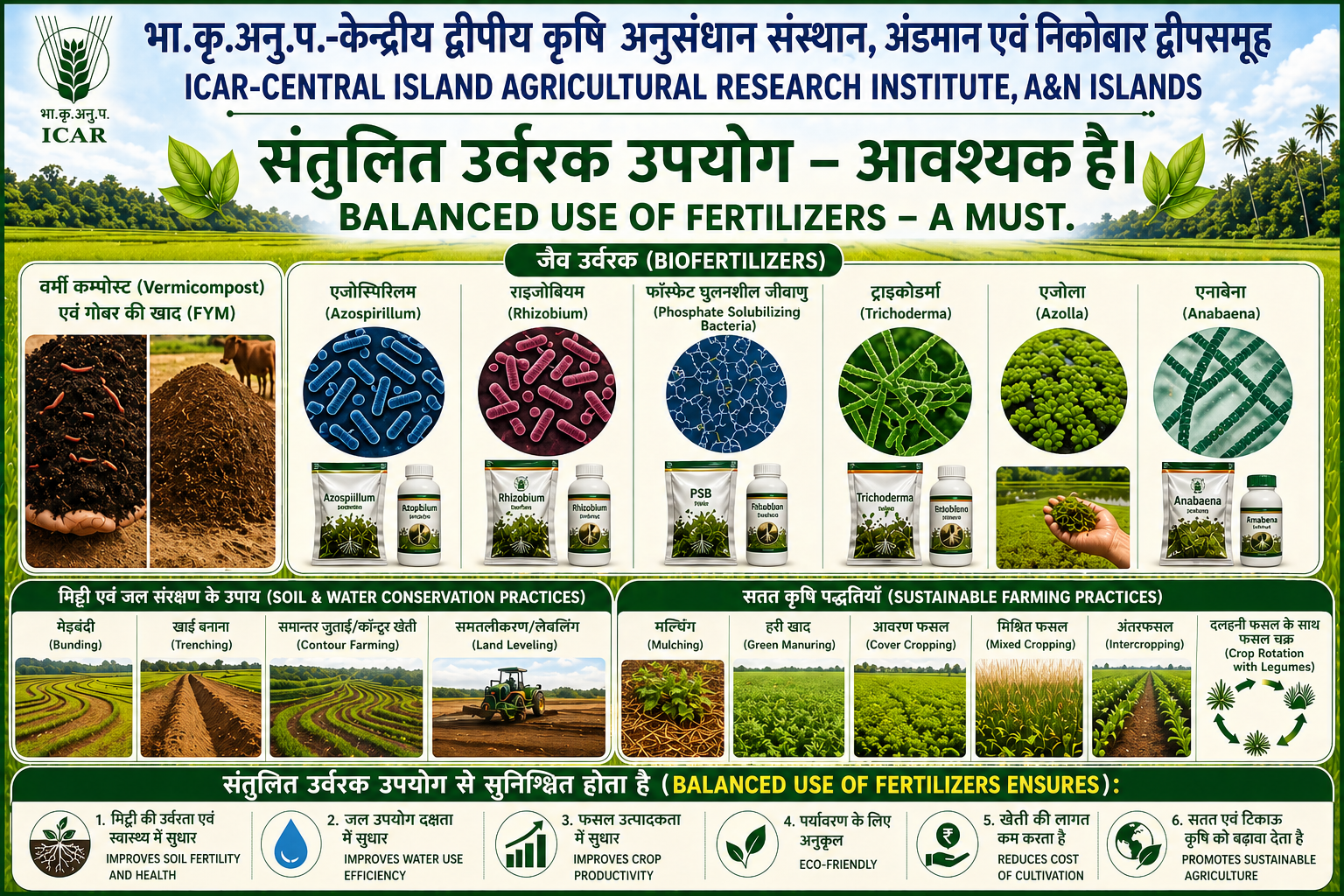
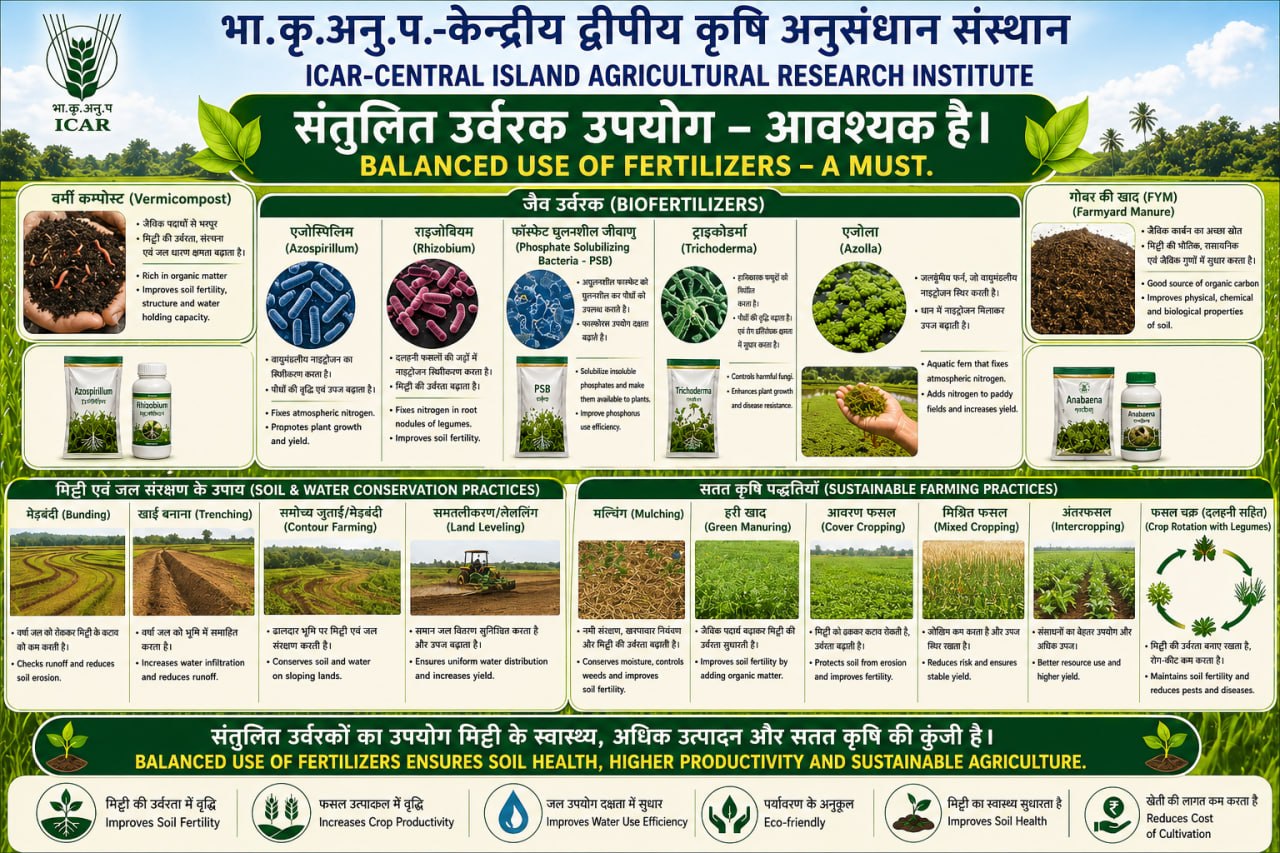
इस निरंतर प्रयास के अंतर्गत Dr. M. Muruganandam, प्रधान वैज्ञानिक एवं मत्स्य विज्ञान प्रभागाध्यक्ष तथा उनकी टीम — Dr. Arun Ajit Waman, वरिष्ठ वैज्ञानिक, Dr. Rafeeqe Rahman, वरिष्ठ वैज्ञानिक एवं Dr. Puneeth P. V., वैज्ञानिक — ने 10 मई 2026 को स्थानीय प्रेस एवं मीडिया के माध्यम से व्यापक जन-जागरूकता हेतु एक प्रेस विज्ञप्ति जारी की। इस संचार सामग्री में विभिन्न प्रकार के उर्वरकों एवं उनकी उपयोगिता को दर्शाने वाला एक चित्रात्मक प्रस्तुतीकरण भी शामिल किया गया है, ताकि किसानों एवं क्षेत्रीय कार्यकर्ताओं सहित प्रमुख हितधारकों को सरल एवं प्रभावी रूप से जानकारी प्राप्त हो सके।
इस प्रेस संचार में फसल उत्पादकता बढ़ाने, लागत कम करने तथा पर्यावरणीय जोखिमों को न्यूनतम करने के लिए जैविक, जैव-उर्वरक एवं अकार्बनिक पोषक स्रोतों के समन्वित उपयोग के महत्व पर बल दिया गया है। फसल एवं उसकी वृद्धि अवस्था के अनुसार संतुलित उर्वरक उपयोग आवश्यक है, जिससे पोषक तत्वों की निरंतर उपलब्धता बनी रहती है, फसल उत्पादकता कायम रहती है तथा मृदा स्वास्थ्य में सुधार होता है।
देश में वर्तमान उर्वरक संकट की स्थिति को देखते हुए संतुलित उर्वरक उपयोग का महत्व और भी बढ़ गया है। उर्वरकों की कमी से प्रभावी ढंग से निपटने के लिए अनुसंधान संस्थानों, कृषि प्रसार तंत्र, राज्य विकास विभागों, गैर-सरकारी संगठनों तथा किसान समुदाय सहित सभी हितधारकों के सहयोग की आवश्यकता है। यह चुनौती किसी एक संस्था या समूह द्वारा हल नहीं की जा सकती; इसके लिए सामूहिक प्रयास, सहयोग एवं समन्वय आवश्यक है।
प्रेस संचार में द्वीपीय कृषि प्रणाली को सुदृढ़ करने हेतु जैव-उर्वरकों एवं जैविक उर्वरकों के उत्पादन और प्रसार को बढ़ावा देने तथा संस्थागत रूप देने की आवश्यकता पर भी बल दिया गया है। खेत स्तर पर वर्मी-कम्पोस्ट उत्पादन, गोबर खाद निर्माण, जैव-उर्वरक उत्पादन एवं वितरण की उन्नत एवं नवाचारी तकनीकों को सुव्यवस्थित कर व्यापक रूप से अपनाने की आवश्यकता है।
उर्वरकों के जिम्मेदार उपयोग के साथ-साथ ढलानदार भूमि एवं द्वीपीय पारिस्थितिकी तंत्र के लिए उपयुक्त मृदा एवं जल संरक्षण उपाय — जैसे मेड़बंदी, ट्रेंचिंग, समोच्च खेती, मल्चिंग, हरी खाद, आवरण फसलें तथा मिश्रित खेती, अंतरवर्तीय खेती एवं फसल चक्र जैसी उन्नत कृषि प्रणालियाँ — भी अत्यंत महत्वपूर्ण हैं और इन्हें द्वीपीय कृषि में अधिक मान्यता मिलनी चाहिए। ये उपाय मृदा एवं जल संसाधनों के संरक्षण, मृदा स्वास्थ्य सुधार तथा संवेदनशील द्वीपीय पारिस्थितिकी तंत्र में कृषि उत्पादकता बढ़ाने में महत्वपूर्ण भूमिका निभाते हैं।
प्रेस संचार में यह भी रेखांकित किया गया है कि भूमि की उत्पादन क्षमता के अनुसार उपयुक्त भूमि उपयोग, मृदा एवं जल संरक्षण उपायों तथा उर्वरकों के जिम्मेदार एवं समन्वित उपयोग को अपनाकर कृषि उत्पादन में वृद्धि की जा सकती है तथा भावी पीढ़ियों के लिए प्राकृतिक संसाधनों का संरक्षण
The ICAR-Central Island Agricultural Research Institute (ICAR-CIARI), Sri Vijaya Puram, Andaman & Nicobar Islands, has been organizing a series of sensitization programmes in farmers’ fields across various locations of the Andaman & Nicobar Islands since last month. The initiative aims to promote the balanced and responsible use of fertilizers as part of a committed drive toward sustainable farming.
As part of this ongoing effort, Dr. M. Muruganandam, Principal Scientist & Head of Fisheries Science Division and his team, Dr. Arun Ajit Waman, Sr Scientist, Dr. Rafeeqe Rahman, Sr Scientist, and Dr. Puneeth P. V., Scientist, made a press communication for large-scale sensitization through local press and media on 10 May 2026. As part of the communication, a pictorial representation highlighting different kinds of fertilizers and their potential has been included to provide a quick and effective understanding for primary stakeholders, including farmers and field functionaries.
The communication emphasizes the importance of integrating organic, biological, and inorganic nutrient sources to enhance crop productivity while reducing input costs and minimizing environmental risks. Balanced fertilizer application according to crop type and crop growth stages is essential for ensuring the sustained release of nutrients, thereby maintaining crop productivity and improving soil health.
The importance of balanced fertilizer use has become even more significant in the present scenario of fertilizer shortages across the country. Addressing fertilizer scarcity through balanced and efficient fertilizer management requires the collaborative support of all stakeholders, including research organizations, extension agencies, state development departments, NGOs, and farming communities. Such a challenge cannot be addressed by any single agency or group; it requires collective action, collaboration, and convergence.
The communication further stresses the need to strengthen and institutionalize the production and promotion of biofertilizers and organic fertilizers to support island farming systems. Improved and innovative techniques for on-farm vermicomposting, farmyard manure preparation, biofertilizer production, and distribution should be streamlined and widely adopted.
In addition to responsible fertilizer use, effective soil and water conservation practices suitable for sloping lands and Island ecosystems, such as bunding, trenching, contour farming, mulching, green manuring, cover cropping, and improved cropping systems like mixed cropping, intercropping, and crop rotation, are equally important and deserve greater recognition in island agriculture. These measures play a vital role in conserving soil and water resources, improving inherent soil health, and enhancing farm productivity in fragile island ecosystems.
The communication highlights that placing land under appropriate land use based on its production potential, combined with soil and water conservation practices and the responsible, integrated use of fertilizers, will help improve agricultural productivity while sustaining natural resources for future generations.